Nabucco Verdi
Archived: 2013/2014Trosolwg
Pan drawir Nabucco â mellten mae’n cyhoeddi ei hun yn dduw...
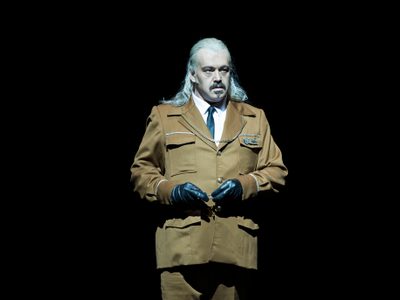
Pan drawir Nabucco â mellten mae’n cyhoeddi ei hun yn dduw. Mae pobl eraill yn meddwl ei fod yn wallgof, yn deyrn, newyddion ddoe, yn dad ac o bosib hyd yn oed yn waredwr. Ar ddydd y farn, sut caiff Nabucco ei farnu?
Mae Nabucco yn fwyaf adnabyddus am ‘Va, pensiero – Corws y Caethweision Hebreaidd’, ac mae’n drysor cyfoethog gan y Verdi ifanc y bydd holl ddilynwyr ei waith eisiau ei ganfod. Mae Nabucco yn gyfatebiaeth operatig i epig Feiblaidd Hollywood y 1950au gyda’i sgôr gyffrous, ddyrchafol.
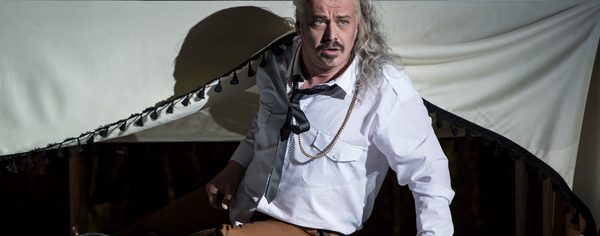
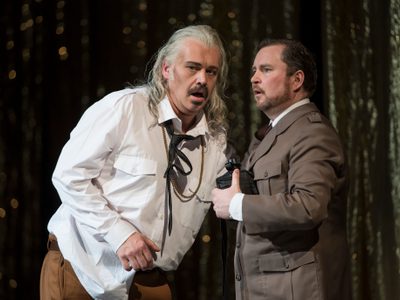
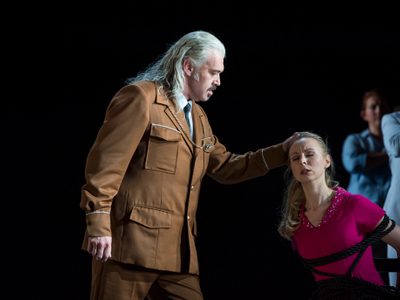
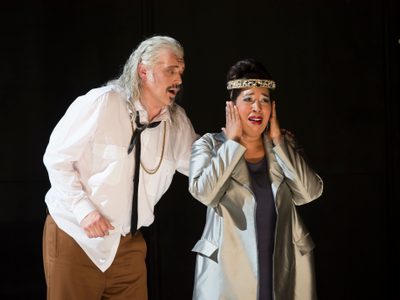
Mae’n bleser gennym gyflwyno Nabucco unwaith eto fel y cwmni sydd wedi’i hailgyflwyno i gynulleidfaoedd Prydeinig ganrif ar ôl iddi gael ei pherfformio ddiwethaf yma. Mae cynhyrchiad Rudolf Frey, sydd wedi'i leoli yn yr oes fodern, yn gosod Corws WNO wrth galon y ddrama.
Byddwch yn gadael Nabucco am adref gan hymian yr alawon a thapio’ch traed am ddyddiau lawer.
Cefnogir gan y Colwinston Charitable Trust, Partneriaid WNO a'r Nabucco Circle.
The Independent A stupendous chorus and excellent cast were the real winners, supported with admirable pace and panache by conductor Xian Zhang’s WNO Orchestra.
Defnyddiol i wybod
Cynhyrchiad newydd
Synopsis
Mae’r Hebreaid yn gweddïo ar Dduw i’w gwarchod rhag y Babiloniaid, sydd wrth giatiau’r deml, o dan arweiniad eu brenin, Nabucco. Mae gan Zaccaria, Archoffeiriad yr Hebreaid, wystlon hanfodol: merch Nabucco, Fenena. Gan ei gadael yng ngofal y tywysog Hebreaidd, Ismaele, mae Zaccaria yn arwain ei bobl i frwydr.
Fe syrthiodd Fenena ac Ismaele mewn cariad pan wnaeth hi helpu i sicrhau ei fod yn cael ei ryddhau o garchar ym Mabilon. Nawr mae ef yn benderfynol o’i gollwng hi’n rhydd. Wrth iddynt gynllunio i ddianc, mae merch arall Nabucco, Abigaille, yn torri i mewn i’r adeilad gyda chiwed o filwyr Babilonaidd wedi’u gwisgo fel Hebreaid. Mae Abigaille hefyd yn caru Ismaele ac yn cynnig achub yr Hebreaid fel pobl os gwnaiff ef ei charu hi am hynny. Mae’n gwrthod.
Mae’r Babiloniaid yn erlid yr Hebreaid sydd wedi’u trechu. Fel mae Nabucco ar fin mynd i mewn i’r Deml, mae Zaccaria'n bygwth lladd Fenena os bydd yn cyflawni’r fath dresmasu halogol. Mae Ismaele yn ymyrryd ac yn cymryd arfau Zaccaria oddi arno. Gyda’i ferch yn ddiogel, mae Nabucco yn gorchymyn dinistrio’r Deml. Mae’r Hebreaid yn cael eu halltudio.
Mae Abigaille wedi dod o hyd i ddogfen sy’n profi nad yw hi’n ferch i Nabucco, ond yn blentyn i gaethwas. Mae hi’n tyngu y bydd hi’n dial ar y brenin ac ar Fenena, y mae Nabucco wedi’i phenodi’n rhaglaw tra mae ef yn dal yng nghanol y rhyfel yn erbyn yr Hebreaid. Daw Archoffeiriad Baal â newyddion i Abigaille bod Fenena wedi gollwng yr Hebreaid yn rhydd. Mae ef a’i ddilynwyr wedi lledu stori gelwyddog bod Nabucco wedi marw mewn brwydr ac mae’n annog Abigaille i gipio’r orsedd.
Mae Zaccaria yn bwriadu troi Fenena at ffydd yr Iddewon. Mae’r Hebreaid yn ymosod ar Ismaele am eu bradychu ond maent yn synnu’n fawr o ddarganfod bod Fenena wedi newid ffydd.
Wrth i Archoffeiriad Baal ac Abigaille geisio meddiannu safle Fenena fel rhaglaw, mae Nabucco yn dychwelyd yn annisgwyl. Mae’n diystyru duwiau Baal a’r Hebreaid ac yn datgan mai ef ei hun yw’r unig wir dduw. Wrth yngan y geiriau hyn mae’n cael ei daro i lawr a’i yrru’n wallgof. Mae Abigaille yn cipio grym.
Mae Nabucco orffwyll yn tarfu ar ddathliadau esgyniad Abigaille i’r orsedd. Mae hi’n gwawdio ei thad ac yn chwarae tric arno i lofnodi’r gwarant ar gyfer dienyddio Fenena a’r Hebreaid. Pan mae’n sylweddoli beth mae wedi’i wneud, mae Nabucco yn ymbil ar Abigaille i ddangos trugaredd, ond mae’n gwrthod. Mae’n ceisio dod o hyd i’r ddogfen sy’n profi ei thras isel, ond mae hi’n ei dangos ei hun ac yn ei rhwygo o flaen ei lygaid.
Mae Nabucco yn gweld Fenena yn cael ei harwain i gael ei dienyddio ac mae’n gweddïo ar dduw yr Hebreaid am help a maddeuant. Mae ei bwyll yn dychwelyd ac mae’n mynd i achub ei ferch.
Mae Fenena a’r Hebreaid condemniedig yn ildio i farwolaeth ond mae Nabucco yn cyrraedd mewn pryd i’w hachub. Mae’n rhoi gorchymyn i ddinistrio delwedd Baal a chan gyhoeddi ei fod am droi at eu ffydd hwy, mae’n addo i’r Hebreaid y bydd yn ailadeiladu’r Deml.
Mae Abigaille wedi cymryd gwenwyn, ond cyn iddi farw, mae’n ymbil ar dduw yr Hebreaid am faddeuant. Mae Zaccaria’n dychwelyd y goron i Nabucco.